
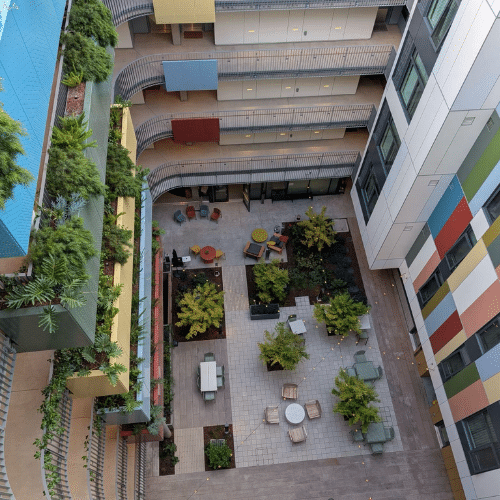
After 25 years in the design & construction industry, I realize that there is a significant difference between what the law defines as “accessible” and what is actually both usable and easy for those with disabilities to maneuver. I’ve taken a much more serious look at this since touring an affordable housing development in the Bay Area completed with Universal Design Standards.
1 – It’s not just slopes and door widths. Accessibility is not JUST wheelchairs. There are elements such as contrasting colors, changes in material, and differences in planting materials even that provide the pathway for those with mental and physical disabilities to gain confidence and clarity as they navigate a space.
2 – It’s not hard. Very inexpensive (or zero cost) alternatives exist that can serve a greater number of people and make a space more accessible without 95% of people even noticing. Things like the alignment of expansion joints in a sidewalk or patio, shielding lighting so it doesn’t produce glare for those in a wheelchair, and other very simple modifications.
3 – It benefits everyone – not just those deemed as “handicapped”. Small things like color coding floors in the elevator lobbies of buildings, changing lighting in a hallway at doors, providing more versatile options for seating and working is not just good Universal design, but it’s good design period. Creating places that people will remember easily, feel comfortable, and feel confident moving through is literally the goal for designers and functionality.
4 – It opens up conversations. People notice. Accessible buttons in an elevator – easier to push, low-cost change, and everyone who goes through the elevator will talk about it. Desk height lobby approaches with space underneath for a wheelchair. More comfortable and approachable. Clear contrasting site and architectural elements at entry doors. These things and other elements all hold interest and showcase a thoughtful approach and a memorable user experience.
5 – It’s good for business. Universal design doesn’t have to have a big price tag OR even be something that’s touted over and over for a project. It can incorporate thoughtfulness and inclusivity without beating you over the head – and that will be respected, remembered, and will gain value faster than the run of the mill.
If you want to know more, please visit thekelsey.org and especially their design standards at https://thekelsey.org/design/
The Kelsey – Courtyard – Sanf Franscisco, CA